
Badrinath Temple
बद्रीनाथ मंदिर
Char Dham shrine dedicated to Vishnu as Badrinarayan.

Latest aarti recording

माता मूर्ति मंदिर की पावन यात्रा #uttarakhand #badrinath · 7 November 2025
YouTube channel: Shri Badarinath-Kedarnath Temple Committee (BKTC) Official. Streams play from each temple's or broadcaster's own YouTube channel. Temple Darshan is an independent app, not affiliated with any temple, trust, YouTube or Google.
Why it is famous
Badrinath is revered as one of the four Char Dham pilgrimage sites and as one of the most important Vishnu temples in India. It is believed that a pilgrimage to Badrinath grants liberation, and many pilgrims undertake the journey as part of the Chota Char Dham yatra along with Yamunotri, Gangotri and Kedarnath. Pilgrims bathe in the Tapt Kund before darshan, and the temple's rituals include the early morning Mahabhishek and the evening Geet Govind recitation. The setting, with the Neelkanth peak visible above the temple, is spectacular. Nearby sites include Mana village, the last Indian village before the Tibetan border, Vyasa Gufa and Bheem Pul. The temple's rituals include offerings of cooked rice, sugar candy and dry fruits, and pilgrims can sponsor special pujas. The town of Badrinath lies close to the Tibetan border, and the temple is also sacred to Buddhists and to some Jain traditions, reflecting the region's layered religious history. The Brahma Kapal ghat, where pilgrims perform rites for ancestors, is a central part of the pilgrimage, and the atmosphere of the town during the season is intensely devotional, with chanting, bells and processions.
History
Badrinath Temple stands at an altitude of about 3,133 metres in the Chamoli district of Uttarakhand, on the banks of the Alaknanda river, between the Nar and Narayan mountain ranges. It is dedicated to Vishnu as Badrinarayan and is one of the four Char Dham pilgrimage sites of India, as well as one of the Chota Char Dham of Uttarakhand and a Divya Desam praised by the Alvar saints. According to tradition, the image of Badrinarayan was found by Adi Shankaracharya in the Alaknanda river in the eighth century and installed in a cave near the Tapt Kund hot springs, and the temple was later built at the current site. Shankaracharya also established the Jyotirmath monastery nearby. The temple has been rebuilt several times due to avalanches and earthquakes, and its present structure was developed with the support of the Garhwal kings, who were considered custodians of the shrine. The temple has a colourful facade, with a tall arched gateway painted in bright colours, reflecting a style somewhat different from other Himalayan temples. The sanctum houses a black stone image of Vishnu seated in meditation, about one metre tall, along with images of other deities. The Tapt Kund, a hot spring below the temple, is used by pilgrims for bathing before darshan. The temple is open from around April or May to around November, with dates fixed each year. During the winter, the utsav murti is taken to Pandukeshwar and Jyotirmath. The temple is managed by the Shri Badrinath-Kedarnath Temple Committee, and the chief priest (Rawal) traditionally comes from the Namboodiri Brahmin community of Kerala, a custom attributed to Shankaracharya.
Tradition & Legend
Passed down through devotional tradition, not verified historical record
According to tradition, Vishnu performed penance at Badrinath, and his consort Lakshmi shielded him from the harsh weather by taking the form of a badri (jujube) tree, which is how the place got its name. The Nar and Narayan mountains are believed to represent the twin sages Nar and Narayan, incarnations of Vishnu. Devotees believe that a pilgrimage to Badrinath grants liberation and that performing ancestral rites (shraddha) at Brahma Kapal, on the banks of the Alaknanda, frees ancestors from the cycle of rebirth. Devotees also believe that the Tapt Kund hot spring is the abode of Agni, the fire god, who asked Vishnu for release from his sins and was allowed to reside here in the form of the spring. Another tradition says that Adi Shankaracharya, after finding the image, placed it in the Narad Kund, and that during the winter, the sage Narada continues the worship of the deity. Many pilgrims regard Badrinath as the place where the Mahabharata was dictated by Vyasa to Ganesha, in the nearby Vyasa Gufa cave.
Festivals
The opening of the temple's doors in spring and their closing in November are the most important events, attracting large crowds. The opening date is announced on Vasant Panchami each year. Mata Murti Ka Mela, held in September, celebrates the mother of Nar and Narayan. Badri Kedar Utsav, a festival of music and dance, is held in June. Janmashtami and other Vaishnava festivals are also celebrated during the pilgrimage season. At the closing of the temple in November, a lamp is lit and the image of Vishnu is covered with a woollen blanket (ghrit kambal) made by the women of Mana village. When the doors reopen, the lamp is found still burning, which devotees regard as a miracle. The Rawal performs worship dressed as Parvati on the last day of the season, symbolising the goddess's companionship. During the pilgrimage season, the Upakarma festival and Navratri are also observed at the temple.
Past Aarti
- पाडुकेश्वर में स्थित योगध्यान बद्री मंदिर #uttarakhand #badrinath
6 November 2025
Nearby temples
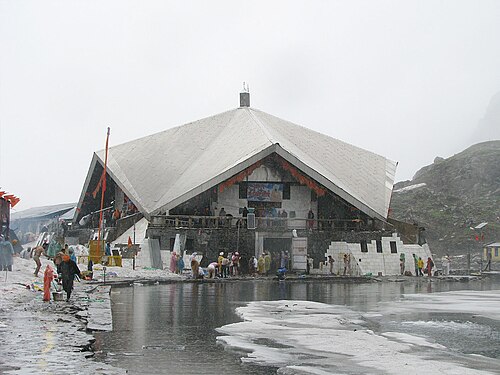 Gurdwara Hemkund SahibSikh Gurdwara (Guru Gobind Singh) · Hemkund, Chamoli, Uttarakhand
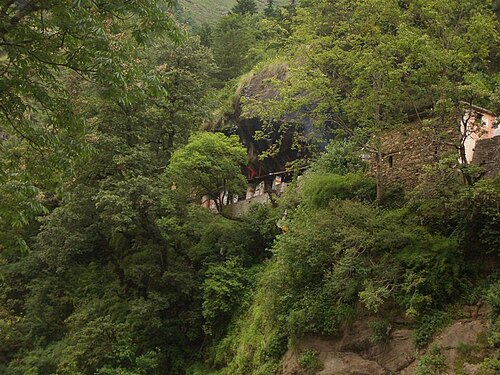 Kalpeshwar TempleLord Shiva (Kalpeshwar) · Urgam, Chamoli, Uttarakhand
 Narsingh Temple, JoshimathLord Narasimha · Joshimath, Chamoli, Uttarakhand
 Rudranath TempleLord Shiva (Rudranath) · Rudranath, Chamoli, Uttarakhand
 Madhyamaheshwar TempleLord Shiva (Madhyamaheshwar) · Madhyamaheshwar, Rudraprayag, Uttarakhand
 Tungnath TempleShiva · Tungnath, Uttarakhand
 LIVEKedarnath TempleShiva · Kedarnath, Uttarakhand
 Triyuginarayan TempleLord Vishnu (Narayan) · Triyuginarayan, Rudraprayag, Uttarakhand

